Camping with Style.
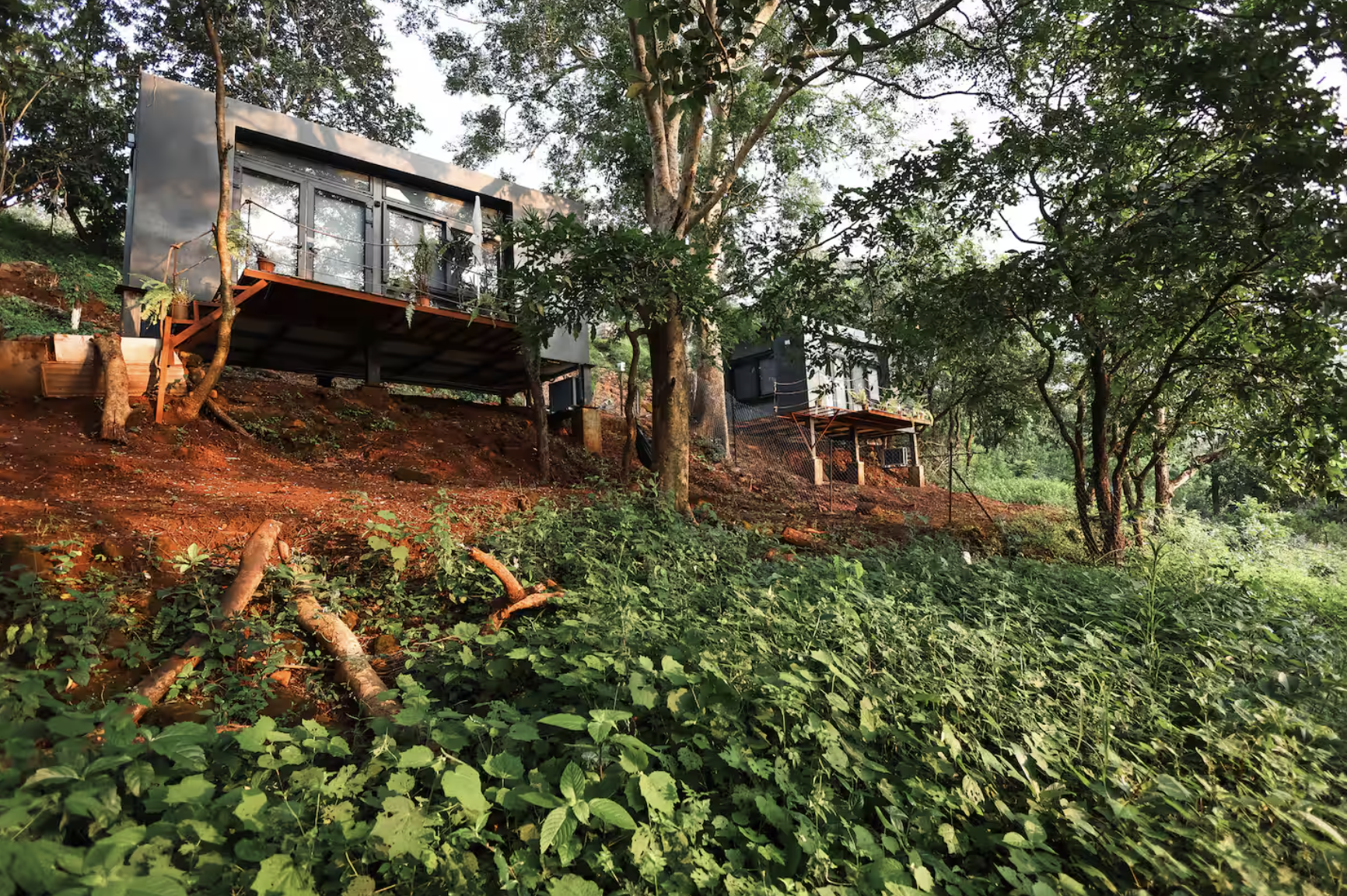
Where forest, wind, and waters meet, two Coons — our tiny cabins — sit tucked into the Varasgaon backwaters, about an hour from Pune. Wind Over Waters is a glamping retreat built for disconnecting: forest bathing, hiking trails, still backwaters, and quiet you can actually hear.
Experience Shinrin Yoku, the Japanese art of forest bathing, as you breathe in the fresh air and let nature work its magic. Get ready for a serene adventure—this is glamping, not a hotel stay.
About Wind Over Waters
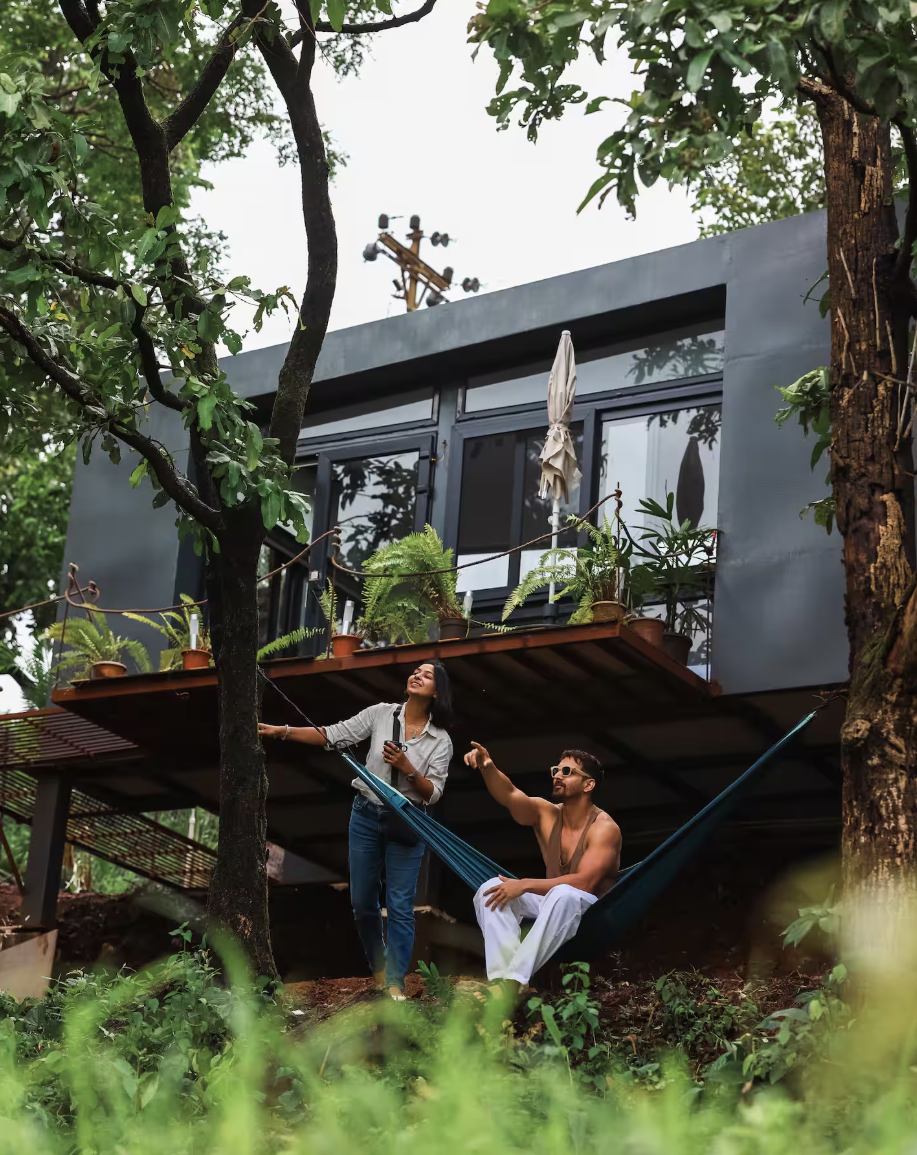
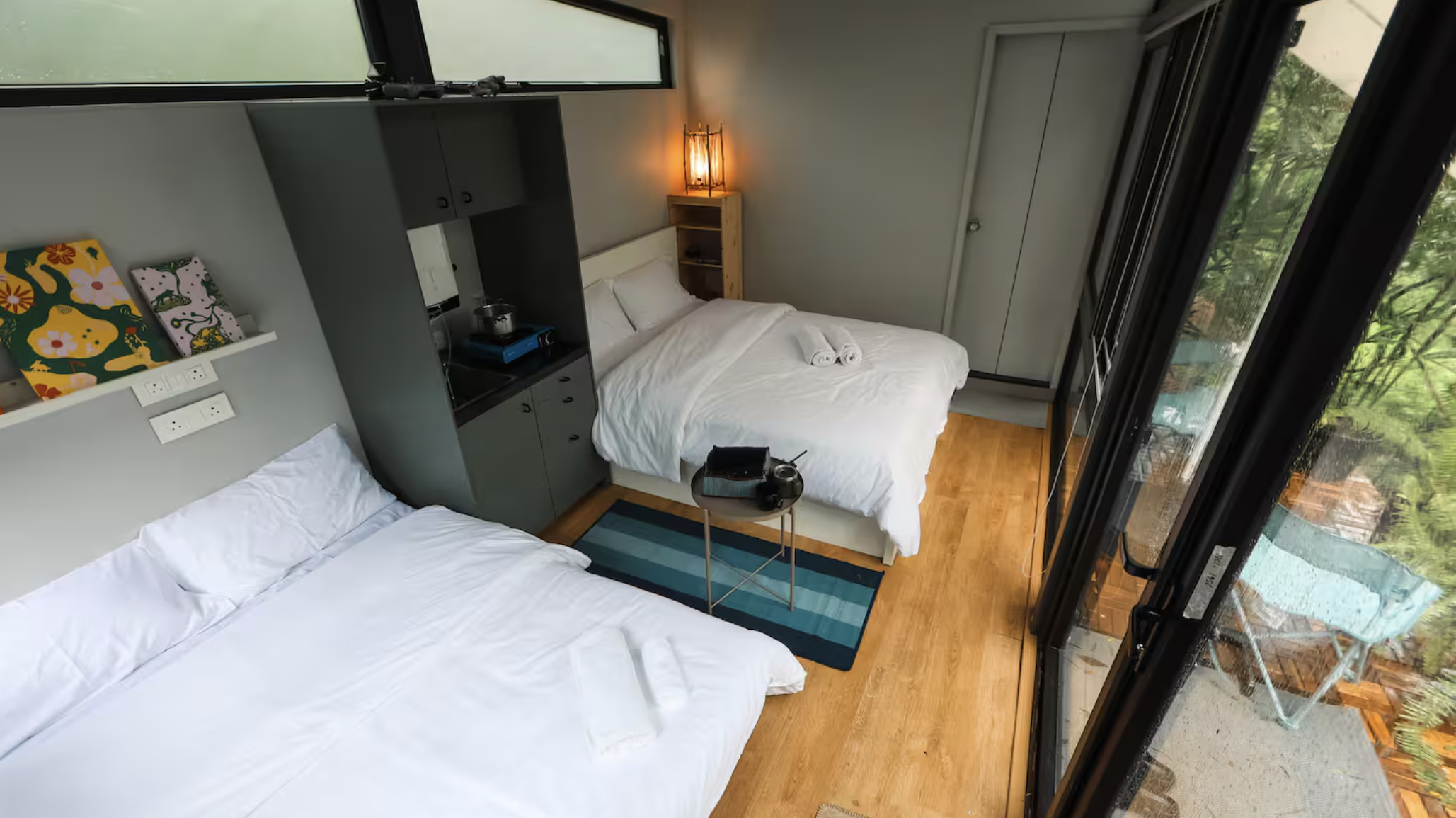
Two Coons — cocoon-inspired, prefab tiny cabins — set at the edge of forest and backwater. Each hosts 2–4 guests in comfort within a compact footprint. Cook your own meals in the kitchenette, bring your own, or pre-order from a nearby resort or farmstay.
The Space
The property is exclusively yours for the stay — no caretaker or staff on-site, just complete privacy, with our team on call whenever needed. Its remote setting is what gives it that stillness, and it's entirely safe.
Guest Access
The cabin and its fenced outdoor space are yours to enjoy for the length of your stay.
Off-Grid Living Note
Do plan for the occasional iffy network and power cut (we run on inverter backup) — think of it as part of going off-grid. Power and mobile networks can fluctuate occasionally.
How We Built Wind Over Waters.
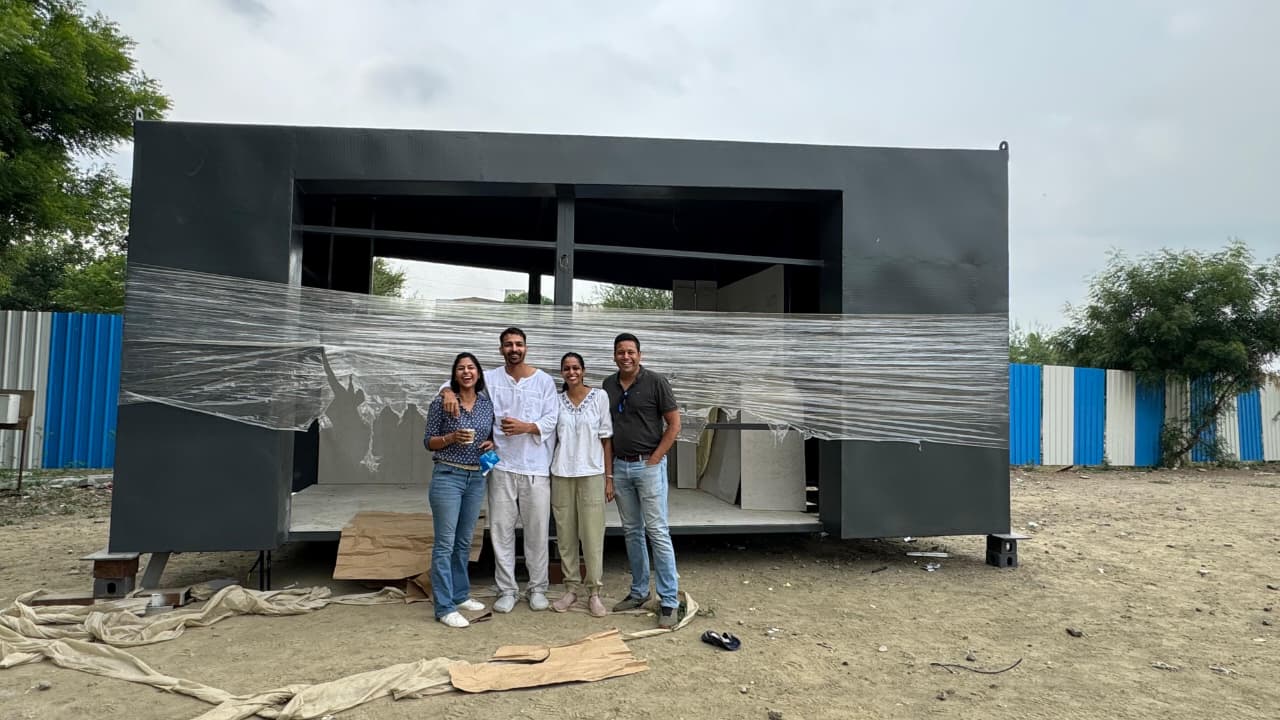
Our cabins here started somewhere else — built offsite, wrapped in stretch film, and driven in on the back of a flatbed. The easy part ended there.
We'd imagined the cabins at around six tonnes, and chose our crane on that assumption. But the road to Velhe narrows as it climbs, and by the time the trailers reached the backwaters, height and a live MSEB power line running straight across the only way in meant that first crane simply couldn't manage the lift. Power had to be cut, permissions taken, cables unplugged — and still, the crane wasn't the problem yet to come. It was monsoon.
The parking area beside the road had been laid with PCC, but weeks of rain had softened the ground beneath it, and the crane's outriggers drilled straight through the concrete the moment they took any weight. Boulders had to be trucked in and packed by hand to give the crane something solid to stand on — slow, patient work in the rain.
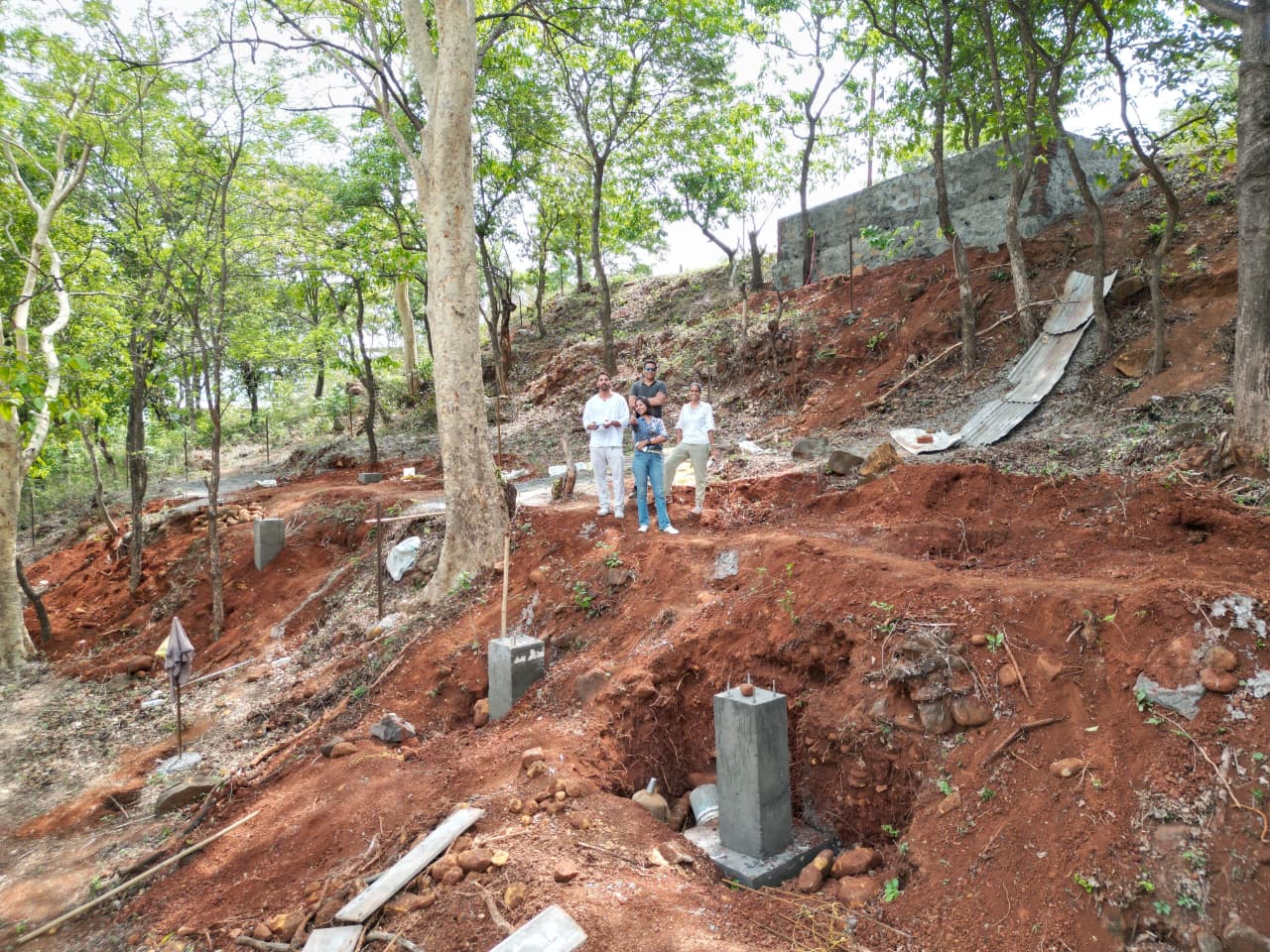
Only once the crane was finally stable did the real number surface: the cabin wasn't six tonnes, it was seven and a half. With the site sitting lower than the road and the span the crane needed to clear, there was a real risk of the crane going over. We needed a bigger machine — a 110-tonne crane — and the nearest one was booked out for another eight days.
So the cabins came off the trailers and waited. Wrapped in plastic, set on compacted ground beside the road, watched over daily — by us, and by neighbours who made sure nothing was disturbed. Four or five days passed before the next attempt.
The second time round, the whole operation assembled again — JCB, trailers, power shut off once more, and the 110-tonne crane taking hours just to get its outriggers stabilised in the mud. Traffic backed up on both sides of the road — buses, school children, a small crowd of onlookers — while, cabin by cabin, the crane lifted each one clear of the line and set it down among the trees.
Both cabins are still standing exactly where they were placed that day. It was, without question, the hardest part of building Wind Over Waters — and not one we'd choose to repeat in July again.
Fabricated by The Coon Co
Prefabricated tiny architecture built for resilience, isolation, and seamless nature integration.
Meet Our Founders.
Amruta Deshpande
Architect
Amruta Deshpande is an architect and founder of DnC and The Coon Co.. With a bachelor's in architecture from the University of Pune and a master's in construction management from Texas A&M University, she brings over a decade of experience integrating design and construction into sensible, inclusive architecture. Her recent work includes portable, prefab tiny homes at The Coon Co. An avid traveler, Amruta is driven by a passion for creating spaces that uplift the soul.
Harshvardhan Rane
Hindi Film Actor
Harshvardhan Rane is a Hindi film actor, best known for Sanam Teri Kasam. A devoted nature lover, he became India's first actor to own and live in a campervan, drawn to a life of freedom, the outdoors, and staying connected to the earth. That same longing for wild, unchained spaces is what he's poured into Wind Over Waters alongside Amruta.